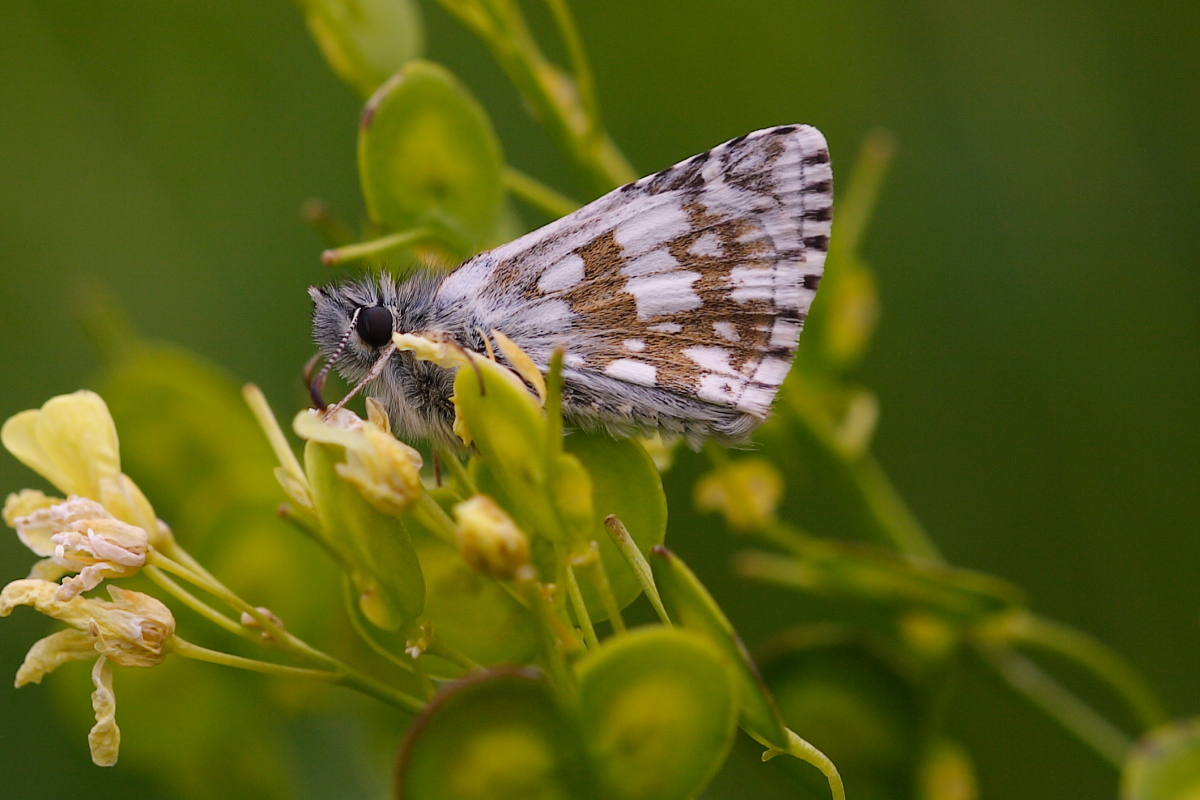
Olive Skipper (Pyrgus serratulae)
2025 photographs highlighted in green. Click on any photograph to go to an enlarged picture, or simply scroll down the page.
|
|
|
|
|
| 44009_male_Hautes-Pyrénées_08Jul17 | 44107_male_Hautes-Pyrénées_10Jul17 | 17795_male_Hautes-Alpes_10Jul09 | 45505_male_Savoie_11Jul18 |
|
|
|
|
|
| 36192_male_Hautes-Alpes_15Jul14 | 41398_male_Hautes-Alpes_14Jul16 | 41400_male_Hautes-Alpes_14Jul16 | 47195_male_Savoie_10Jul20 |
|
|
|
|
|
| 47228_male_Savoie_10Jul20 | 47324_male_Hautes-Alpes_13Jul20 | 48307_male_Hautes-Pyrénées_10Jul21 | 52485_male_Hautes-Alpes_2Jul24 |
|
|
|
|
|
| 49652_female_Hautes-Alpes_7Jul22 | 47318_female_Hautes-Alpes_13Jul20 | 3742_female_Alpes-de-Haute-Provence_14Aug06 | 33377_female_Hautes-Alpes_3Jul13 |
|
|
|
|
|
| 44017_male_Hautes-Pyrénées_08Jul17 | 35206_female_Alpes-Maritimes_3Jun14 | 33360_female_Hautes-Alpes_3Jul13 | 25699_sex?_Alpes-Maritimes_11Jun11 |
|
A medium-sized Pyrgus that I encounter most frequently at medium to high altitude, even though the altitude range given by Lafranchis is 0-2200m. It has a medium dark brown upperside ground colour and the female is said to have a brassy olive tinge, although I have rarely seen this (maybe 33377?), but probably because I have not seen many fresh females.
The upf is - usually but not always - very lightly marked with smallish white spots in both sexes, usually more strongly marked in the male. The uph is - usually - almost completely unmarked except for very pale, almost vestigial, markings.
However, I have seen examples of what must be serratulae where the extent of the upf white marks is considerably greater than the classic pattern, and there are some examples on this page. It is also true that some serratulae have uph marks that are much more contrasted than the norm, although in my experience, this is infrequent. 36192 is an example.
However, in 2024 there were some examples of a Pyrgus in the Hautes-Alpes shown on another web site, those images taken in May, which showed much heavier markings on the upperside, much more so than the July specimens shown on this page, although the unh markings looked typical for serratulae. It seemed that the underside and upperside did not match but the underside markings were less likely to "lie" and therefore it can be concluded that early season serratulae can be more heavily marked. |
It is a widespread altitude Pyrgus, found in greater or lesser numbers, sometimes in very large numbers indeed. It is also, in my experience, a hugely variable species, both in terms of the ups ground colour and in the size and strength of the upf markings.
The books, understandably, show typical serratulae with small upf markings, e.g. 45505. Whilst this may be typical, it is not definitive, and it often leads people to assume that if it does not look like the book illustration, it cannot be serratulae. The books, equally understandably, are reluctant to mention the degree and range of variability.
The unh ground colour is olive to yellow-green, this being the reason for its English name.
The unh distinguishing features are the rather solid-filled rounded arc-shaped marks in marginal s2; the discal s1 rounded but non-leaning bump; and, most often quoted, the basal spot in s7 is circular or oval(-ish), although the limits of this feature are unclear as I suspect that there are serratulae where this mark is rather rectangular with heavily rounded corners and in this respect could give rise to confusion with other species.
the unh is thus also liable to variability albeit to a much more limited extent than the ups.
|
| ref | sex |
observations |
alt. m |
| 44009 | M | a male with rather large and jagged markings, unusual for serratulae, which it clearly is, as 44017 is the underside. It has a rather grey ground colour for this species. | 2070 |
| 44107 | M | another strongly marked male serratulae. | 2120 |
| 17795 | M |
a male, although the upf markings are rather stronger, equally the uph markings are virtually non-existent apart from a vestigial discal mark. |
1890 |
| 45505 | M |
a typically-marked male, the degree of the upf white spots being the norm for this species, whereas several on this page show a heavy degree of markings that are not typical for this species. |
1930 |
| 36192 | M | a male from high altitude. It is very strongly marked by serratulae standards, and the identification was confirmed by a clear view of the underside. | 2550 |
| 41398 | M | a rather darker ground colour than 41382 and with much larger, bolder upf markings. | 1960 |
| 41400 | M | a male, similar to 41382 but even more lightly marked. These two and 41398 were all seen at the same location on the same day, indicating just how variable serratulae can be even within a small population. | 1960 |
| 47195 | M |
A very unusual serratulae, with very dark, cold brown, areas on the uph with lighter, more contrasted regions, especially the discal mark. The upf is an odd mixture of dark patches on a rather sandy ground colouring (or vice versa). The dark patches are probably a clinal effect. |
1930 |
| 47228 | M | From the same location as 47195 and 47196, but completely different in appearance, illustrating the extreme variation of this species even within a very small area. It is exceptionally and consistently dark across both upf and uph, with the uph discal marks almost indiscernible, and the small upf markings very white and strongly contrasted. Again, very unusual for serratulae. | 1930 |
| 47324 | M | Probably more typical for serratulae, although the markings are slightly larger than normal, and a little jagged, but I am reasonably confident it is serratulae. | 1960 |
| 48307 | M | a male from the Hautes-Pyrénées, quite heavily marked by the standards of serratulae, the identification being confirmed (as far as anything can be certain for Pyrgus) from a view of the underside. | 1560 |
| 52485 | M | a fresh male, a very dark ground colour and probably typical for the degree of markings for serratulae. | 1380 |
| 49652 | F | a very lightly marked female, with a very sandy basal flush. | 1880 |
| 47318 | F | A female, and rather more typical of female serratulae, although the uph discal mark is rather more contrasted than normal. | 1960 |
| 3742 | F |
very pale and drab, with very few markings on the upf all of which are concentrated in s5-7, with s1-4 almost completely unmarked. The uph is almost completely unmarked with very pale, almost vestigial, markings. It is almost certainly a female based on body shape. It could be alveus, carlinae, or serratulae, the females of which are all lightly marked; I would plump for serratulae on the grounds that the uph is virtually unmarked (alveus and carlinae have pale but somewhat stronger uph markings), and the absence of any upf markings in s1-4 which matches the book illustrations of serratulae, whereas alveus and carlinae have some weak markings in these areas. The strength of the cell spot does give me some concerns about serratulae, though. All three have an upper altitude range in excess of 2000m, so the altitude would not tend to eliminate any of these three possibilities. |
2000 |
| 33377 | F | a female, very fresh and may have just emerged. The upf yellow-brown dusting at the base of the wing tends to become less sandy with age. 33360 is the underside. | 1700 |
| 44017 | M | the underside of 44009. The basal s7 mark is nicely rounded and the marginal s2 mark is rounded and solid-filled, both good indicators of serratulae, although the s1 discal mark is leaning slightly which in my experience is atypical of serratulae. | 2070 |
| 35206 | F | a female, a rather poor photograph but it does illustrate classic serratulae in terms of the colouring and most markings. The basal mark in s7 is not typically rounded, but the discal mark in s4/5 is wide and classic serratulae, although the converse is not necessarily true; the white margin is white and continuous, showing why such specimens can easily be mis-identified as Safflower Skipper (Pyrgus carthami) for which this white margin is often quoted as characteristic. | 1080 |
| 33360 | F | the colouring is distinctly olive-brown and the markings are classical, albeit small, for this species, especially the basal s7 mark which is very nicely rounded. 33377 is the upperside. | 1700 |
| 25699 | M? | possibly a male as it appears that the end of the abdomen shows a hair tuft. The discal s1 bump is wide and non-leaning, the marginal s2 is neatly arch-shaped and filled in, the discal s4/5 mark is quite wide, and the basal s7 mark is nicely rounded, all adding up to a virtually 100% identification for serratulae. | 2000 |
44009_male_Hautes-Pyrénées_08Jul17

44107_male_Hautes-Pyrénées_10Jul17

17795_male_Hautes-Alpes_10Jul09
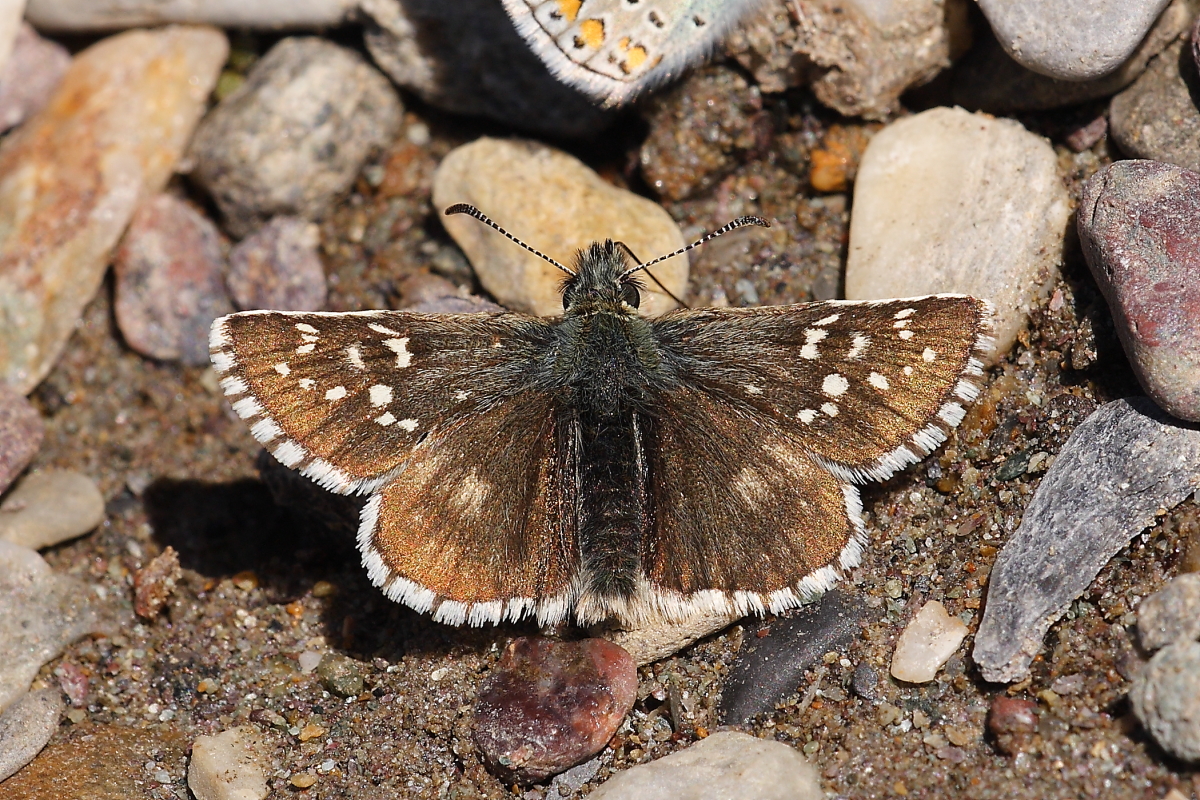

36192_male_Hautes-Alpes_15Jul14

41398_male_Hautes-Alpes_14Jul16

41400_male_Hautes-Alpes_14Jul16


47324_male_Hautes-Alpes_13Jul20

48307_male_Hautes-Pyrénées_10Jul21

52485_male_Hautes-Alpes_2Jul24

49652_female_Hautes-Alpes_7Jul22

47318_female_Hautes-Alpes_13Jul20

3742_female_Alpes-de-Haute-Provence_14Aug06
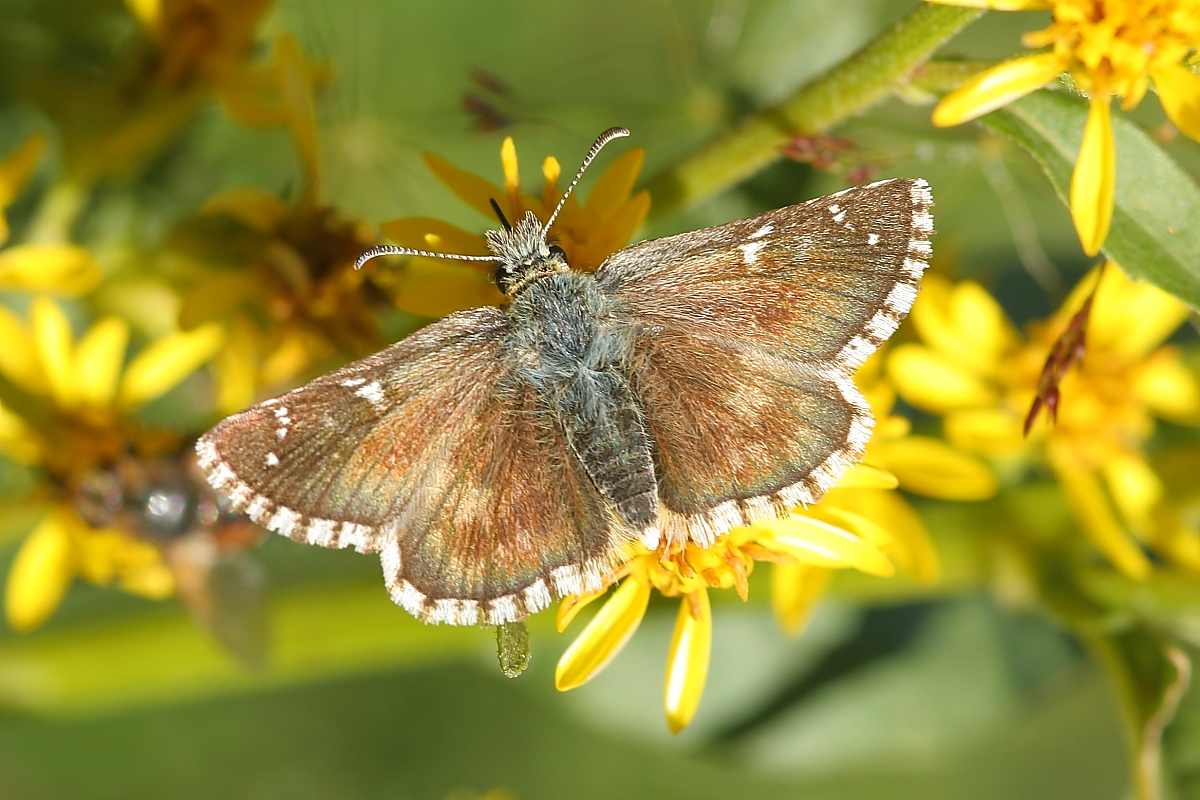
33377_female_Hautes-Alpes_3Jul13

44017_male_Hautes-Pyrénées_08Jul17

35206_female_Alpes-Maritimes_3Jun14

33360_female_Hautes-Alpes_3Jul13

25699_sex?_Alpes-Maritimes_11Jun11