


Large Wall (Lasiommata maera)
2024 photographs highlighted in yellow. Click on any photograph to go to an enlarged picture, or simply scroll down the page.
|
|
|
|
|
| 7900_male_Isère_5Jul07 | 41833_male_Savoie_21Jul16 | 19142_male_Gard_28Aug09 | 22875_female_Valais, Switzerland_21Jul10 |
|
|
|
|
|
| 18612_female_Isère_14Jul09 | 33645_female_Alpes-de-Haute-Provence_10Jul13 | 30168_female_Alpes-Maritimes_1Jul12 | 50229_female_Côte-d'Or_26Jul22 |
|
|
|
|
|
| 50452_female_Var_28Aug22 | 50504_female_Var_31Aug22 | 15047_male_Var_09May09 | 12324_male_Isère_9Jul08 |
|
|
|
|
|
| 13031_male_Valais, Switzerland_16Jul08 | 50230_female_Côte-d'Or_26Jul22 | 50474_female_Var_31Aug22 |
|
Maera is superficially quite similar to the Wall (L. megera), although there are significant differences on close inspection. Megera is declining alarmingly in the UK but still reasonably common in southern France, although maera sometimes seems commoner, especially at medium and high altitudes. Maera does not occur in the UK.
Maera often poses quite obligingly for photographs, although it has a habit of settling in the dark shady areas on walls and rocks, presumably to escape the heat in the middle of the day. The nominate form of maera is easy to differentiate from megera as it is almost uniformly dark brown (not to mention maera usually being appreciably larger).
However, the female of the maera southern subspecies adrasta, which is said (in H&R) to be predominant in southern France and Iberia, has lighter markings and is more extensively orange, making differentiation from megera slightly more difficult. I have seen adrasta in the Pyrénées, but on balance I believe the maera in Var are of the nominate form, so I wonder if H&R is right on this point. |
Tim Cowles' detailed analysis points up the key differentiators between megera and maera, including the underside where three of the maera ocelli (s2, s3 and s6) are appreciably larger (clear in 15047 and to a lesser extent in 13031), whereas the six megera unh ocelli are of broadly equal size. This size difference is probably clearest between the ocelli in s3 and s4. You don't tend to find invaluable information like this in books.
Another clue to the identification of these two species from an underside view alone is the light-coloured unh submarginal band. The curvature of these marks is quite shallow in maera, but noticeably much deeper in megera. Thanks to Guy Padfield for this clue, which was new to me in 2023.
There is also the Northern Wall Brown (L. petropolitana) which is very similar to the nominate form of maera, which belies its name as it is found in Scandinavia and the Alpes and Pyrénées, but not in between. Petropolitana is slightly smaller and darker and has a clear, although sometimes not very distinctive, discal line on the uph. |
|
ref |
sex |
observations |
alt. m |
|
7900 |
M |
a typical male of the nominate form. |
1450 |
|
41833 |
M |
a beautiful deep brown male maera, really a spectacularly attractive butterfly. |
1680 |
|
19142 |
M |
a male megera, I originally thought, even though Lafranchis cites the absence of a uph orange discal band as a key indicator of maera. Certainly, 19142 lacks this orange band, where one would normally expect to see one for megera. However, it looks completely unlike any other maera I have ever seen in southern France where maera is relatively common, and exactly like megera which is really quite common. The reason for this is that 19142 is a male of the subspecies adrasta. I invited comment and Guy Padfield kindly pointed out that the upf s6 basal bar is always present in megera and not in maera (compare with megera 10376), and that the sex brand (the darker band in the middle of the upf) is wide and dark in megera and narrower and lighter in maera. It seems fairly conclusive that 19142 is indeed maera, despite winning first prize in a megera look-alike competition. |
580 |
|
22875 |
F |
a female. |
1740 |
|
18612 |
F |
a female of the nominate form. |
1230 |
|
33645 |
F |
a particularly bright and fresh female. The white margin sets off the orange-brown to good effect. |
1000 |
|
30168 |
F |
a beautifully marked fresh female. |
1320 |
| 50229 | F | a female of the form adrasta. | 320 |
| 50452 | F | a female of the form adrasta, rather light in colouring. | 640 |
| 50504 | F | a female of the form adrasta, very rich golden brown in colouring. | 780 |
|
15047 |
M |
a male, based on body shape. |
450 |
|
12324 |
M |
a male underside of the nominate form. |
1470 |
|
13031 |
M |
a male underside of the nominate form. |
1700 |
| 50230 | F | a female with a rather light unh ground colour, contrasting with the strong discal lines and brightly-ringed ocelli. | 320 |
| 50474 | F | a female underside, fairly typical for maera. | 780 |


22875_female_Valais, Switzerland_21Jul10

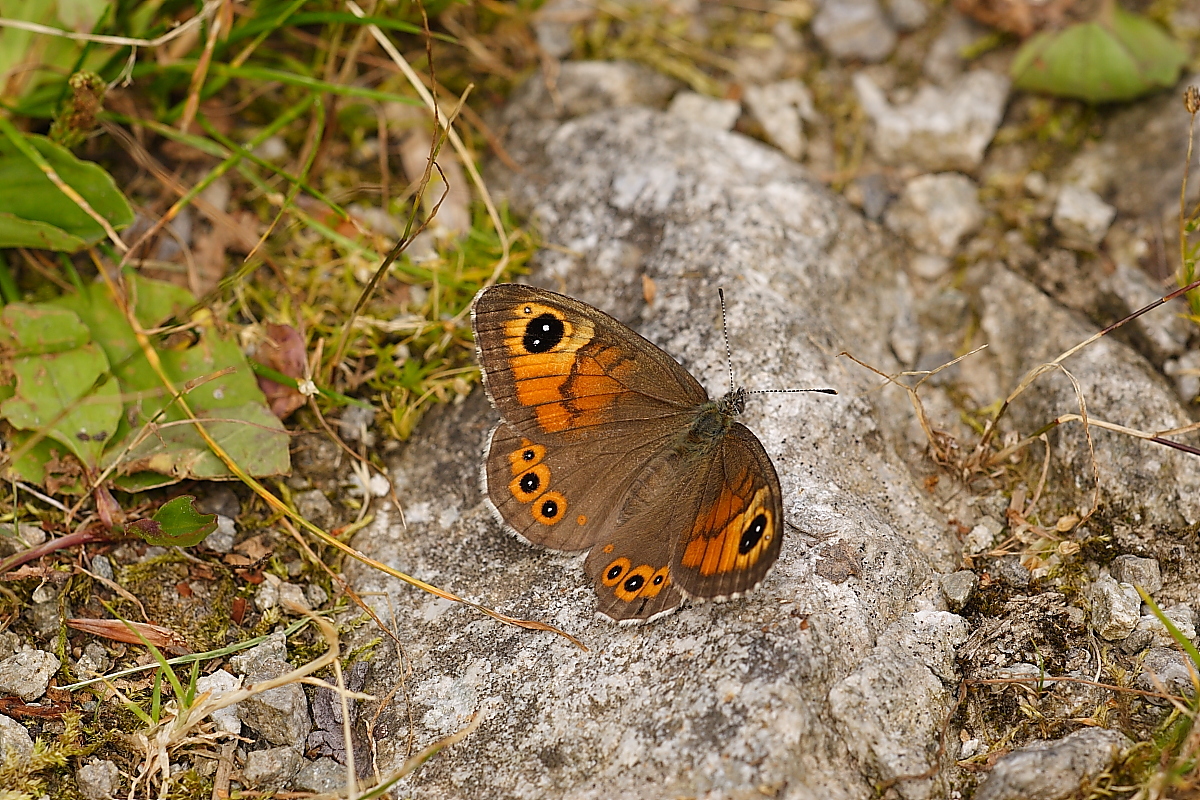
33645_female_Alpes-de-Haute-Provence_10Jul13

30168_female_Alpes-Maritimes_1Jul12

50229_female_Côte-d'Or_26Jul22


13031_male_Valais, Switzerland_16Jul08

50230_female_Côte-d'Or_26Jul22

