


Mountain Ringlet (Erebia epiphron)
2024 photographs highlighted in yellow. Click on any photograph to go to an enlarged picture, or simply scroll down the page.
|
|
|
|
|
| 27145_male_Hautes-Alpes_14Jul11 | 23052_male_Valais, Switzerland_24Jul10 | 40858_male_Alpes-Maritimes_2Jul16 | 46746_male_Hautes-Alpes_20Jul19 |
|
|
|
|
|
| 46820_male_Hautes-Alpes_21Jul19 | 46829_male_Hautes-Alpes_21Jul19 | 44035_male_Hautes-Pyrénées_09Jul17 | 44051_male_Hautes-Pyrénées_09Jul17 |
|
|
|
|
|
| 48121_male_Hautes-Pyrénées_5Jul21 | 05_23-23_male_Ariège_23Jul05 | 51200_male_Pyrénées-Orientales_5Jul23 | 51391_female_Hautes-Pyrénées_9Jul23 |
|
|
|
|
|
| 44028_female_Hautes-Pyrénées_09Jul17 | 27029_female_Hautes-Alpes_14Jul11 | 8317_female_Valais, Switzerland_22Jul07 | 38662_female_Pyrénées-Orientales_17Jul15 |
|
|
|
||
| 38681_female_Pyrénées-Orientales_17Jul15 | 51365_pair_Hautes-Pyrénées_9Jul23 |
|
Epiphron has a number of widely separated populations across Europe, each of a clearly different appearance. Lafranchis says it is widespread and abundant in France in the Alpes and Pyrénées, but this has not been my experience, as I see it only occasionally in France.
It has a habit of settling low in grassy areas, especially in cooler conditions, where it can be difficult to photograph.
Epiphron can be identified by the slightly angled hindwing, more prominent in the female, although I don't always find this to be true; as is often the case with the "pointers" described in books, if it has it, that is confirmation, but absence does not necessarily preclude it.
The nominate species epiphron was first named as occurring in the Harz mountains in Germany, but this is considered extinct. |
There are numerous subspecies and forms of this highly variable species. Of the subspecies that occur in France (and there several others that occur elsewhere in Europe):
aetheria: this is normally considered to be the Alpine subspecies. It has a rather diffuse upf red post-discal band, wider in the female, and having a series of small blind ocelli, usually four (in s2 to s5) present in the female.
However, in the Maritime Alpes, a form (subspecies?) of aetheria occurs known as cydamus, according to T&L, which resembles mnemon (see below).
fauveaui: the Pyrénéan subspecies, which has a rather tidier upf red post-discal band and larger, but blind, ocelli.
mackeri: flies in France in the Vosges mountains, and resembles fauveaui more than aetheria.
mnemon: this subspecies occurs in south central France, in the Massif Central and in the Auvergne. It generally has a darker ground colour, narrower and a redder upf post-discal band broken in discrete markings. This is the subspecies that occurs in the UK, in discrete colonies in the Lake District in northern England, and in western Scotland. There is also the subspecies scotica which occurs in northern Scotland. |
| ref | sex |
observations |
alt. m |
| 27145 | M | I believe this to be a male epiphron (of the subspecies aetheria) even though the post-discal band is very wide and quite well-defined, and the ocelli in s4 and s5 and quite large, much more so than would be normal for male epiphron. | 2040 |
| 23052 | M |
a male (?) of the form aetheria. This is indicated by the rather ill-defined red upf post-discal band which is slightly constricted in the middle at s3, the pin-prick blind ocelli and the absence of any ocellus in s6. The hindwing is clearly angled and the red band quite wide, both of which would suggest female, even though I am fairly sure 23052 is a male based on body length and shape. |
2200 |
| 40858 | M | I believe this to be of the subspecies aetheria form cydamus, which resembles the subspecies mnemon (see narrative above), and it does indeed match the description of mnemon very well. | 2000 |
| 46746 | M | a rather diffuse upf post-discal band with a complete set of four ocelli of about average size. The band is quite wide which suggests female, as does the slightly lighter colour, but I believe the body shape and length, from what can be seen, confirms male. It is the subspecies aetheria. | 2550 |
| 46820 | M | a male with a darker ground colour which contrasts the upf post-discal band. The ocelli are quite large and in this respect resembles the Pyrénées subspecies fauveaui, although the location means that it is the subspecies aetheria. This illustrates that there is considerable variation even within the subspecies aetheria. | 1960 |
| 46829 | M | a male, and I am assuming this must be epiphron only on the basis that I can find good reasons to eliminate other possible Erebia species. It was seen at the same location and at the same time as 46820 above. It is extreme in its markings and as such, assuming it to be epiphron, something of an aberration. | 1960 |
| 44035 | M | a male of the subspecies fauveaui, meeting the description quite well in terms of the neat upf post-discal band and the large blind ocelli. | 2070 |
| 44051 | M | also a male of the subspecies fauveaui, very similar to 44035 but rather paler, perhaps due to wear. | 1780 |
| 48121 | M | a male of the subspecies fauveaui, not a very good photograph but it does illustrate the exceptionally large and blind upf ocelli. | 2070 |
| 05_23-23 | M |
this is, I believe, the subspecies fauveaui with the red upf post-discal band reduced, especially in s3, and larger (blind) ocelli than the other forms. The upf ocellus in s3 seems smaller and very isolated, more so than I would have expected from the T&L illustration of fauveaui, but this may be within the range of normal variation. |
1600 |
| 51200 | M | a very dark male, looking unlike fauveaui for much of the same reasons as 05_23-23 above. It could conceivably be taken for False Dewy Ringlet (E. sthennyo) except that it was seen in a location where sthennyo does not occur. | 1820 |
| 51391 | F | a typical fauveaui female, with a rather diffuse red post-discal band, evenn though it appears to be fresh. | 2070 |
| 44028 | F | a female of the subspecies fauveaui, heavily gravid and unusually with ocelli that have small but clear pupils. | 2070 |
| 27029 | M | I believe this to be a female epiphron of the subspecies aetheria on the basis of the wide post-discal band and the neat series of four small blind ocelli. I would suggest this is classic female aetheria. | 2020 |
| 8317 | F |
a female of the subspecies aetheria. The clues to it being female are the wide upf post-discal band, the minute blind ocelli in s2-5 (albeit not as large as I would have expected for a female), and the slightly angled hindwing at s3. The slight but just-visible body shape suggests female. |
2200 |
| 38662 | F | a female of the subspecies fauveaui, freshly emerged. The red post-discal band is particularly wide and each segment separated and waisted; this is possibly as extreme as it gets for fauveaui. 38681 is the underside. | 1730 |
| 38681 | F | a female, the underside of 38662. | 1730 |
| 51365 | PAIR | a pair in copula, the female above, I'm guessing, based on the shape of the abdomen. | 2070 |
27145_male_Hautes-Alpes_14Jul11

23052_male_Valais, Switzerland_24Jul10

40858_male_Alpes-Maritimes_2Jul16

46746_male_Hautes-Alpes_20Jul19

46820_male_Hautes-Alpes_21Jul19

46829_male_Hautes-Alpes_21Jul19
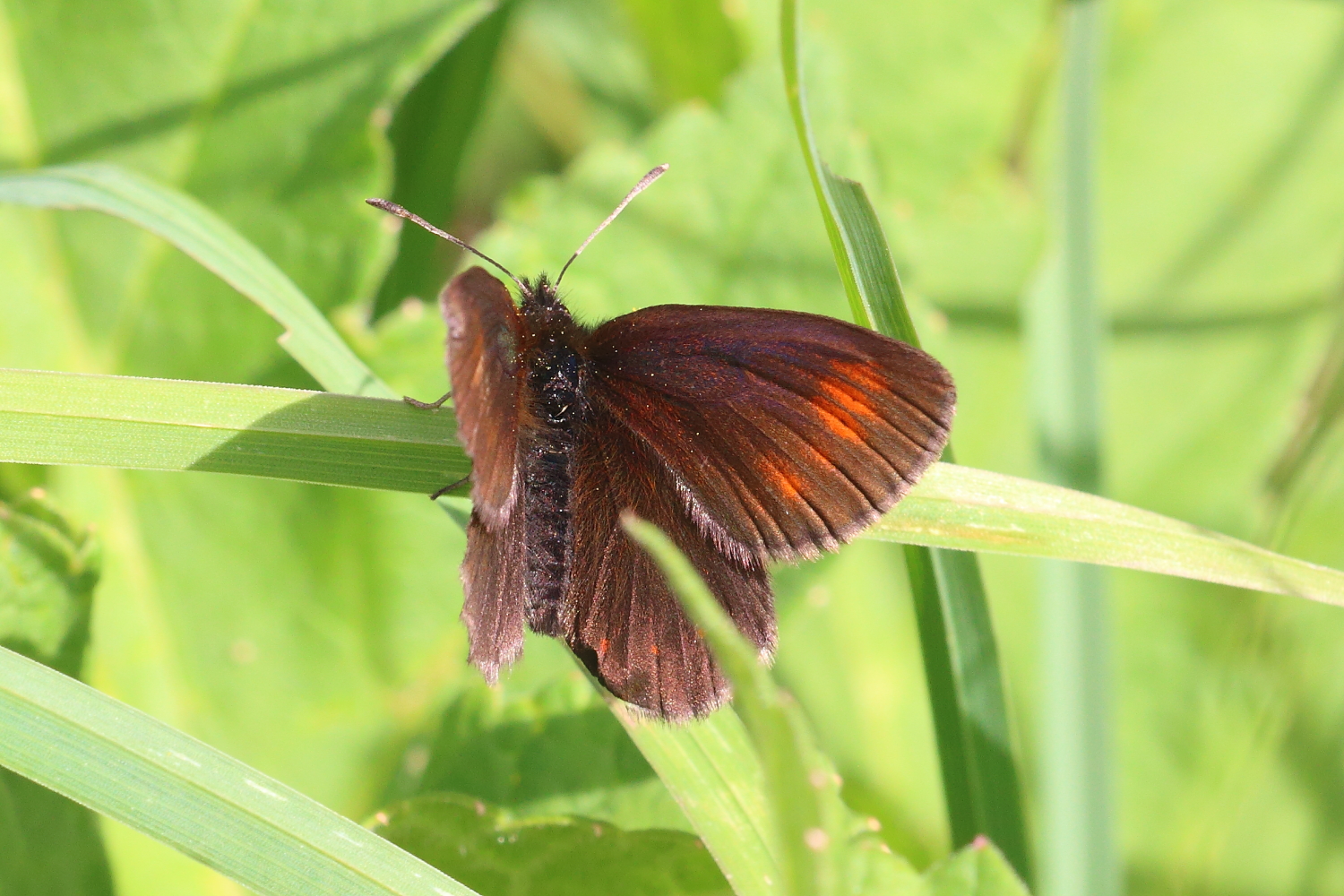
44035_male_Hautes-Pyrénées_09Jul17

44051_male_Hautes-Pyrénées_09Jul17

48121_male_Hautes-Pyrénées_5Jul21


51200_male_Pyrénées-Orientales_5Jul23

51391_female_Hautes-Pyrénées_9Jul23

44028_female_Hautes-Pyrénées_09Jul17

27029_female_Hautes-Alpes_14Jul11

8317_female_Valais, Switzerland_22Jul07

38662_female_Pyrénées-Orientales_17Jul15

38681_female_Pyrénées-Orientales_17Jul15

51365_pair_Hautes-Pyrénées_9Jul23
