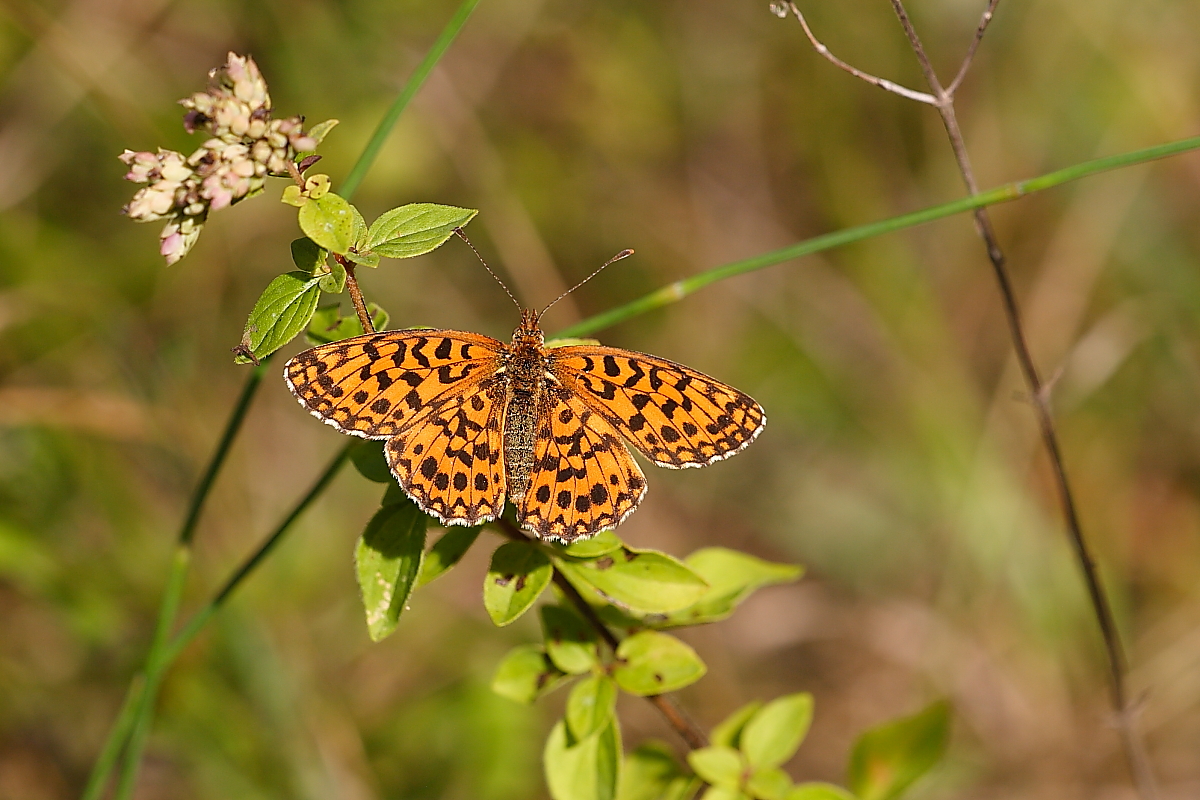
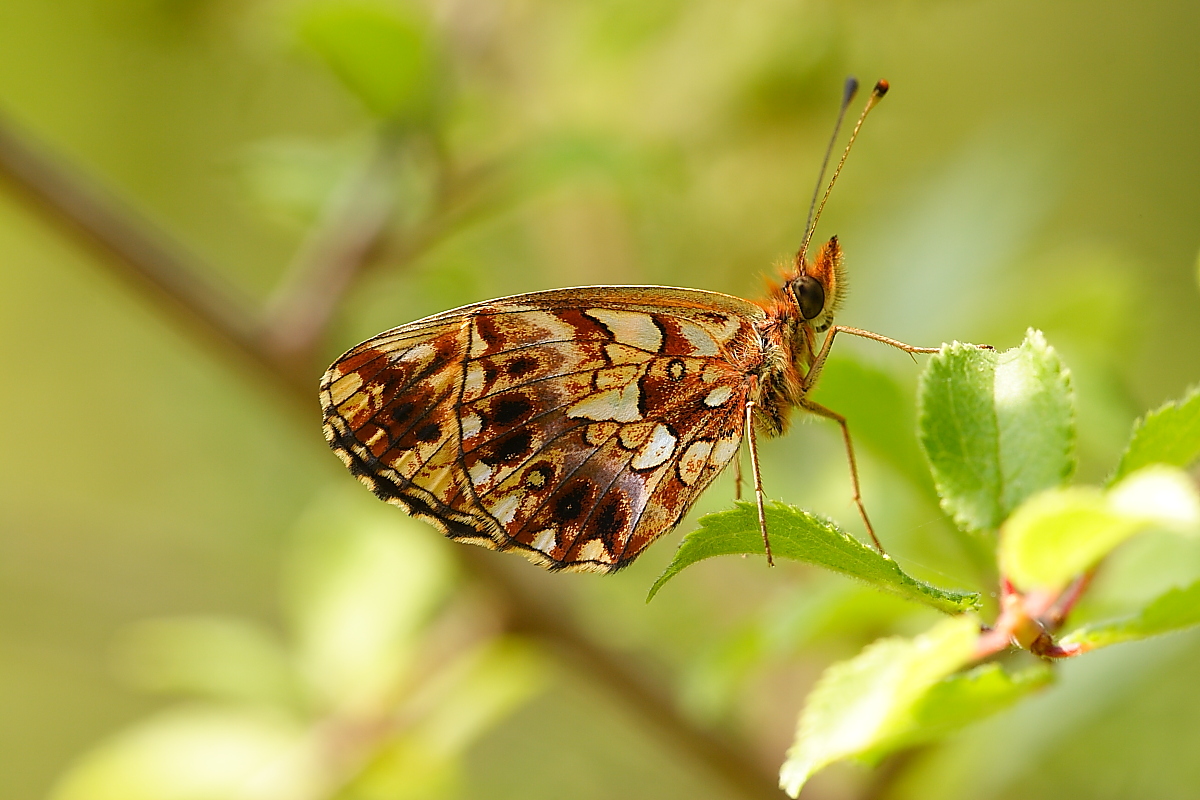
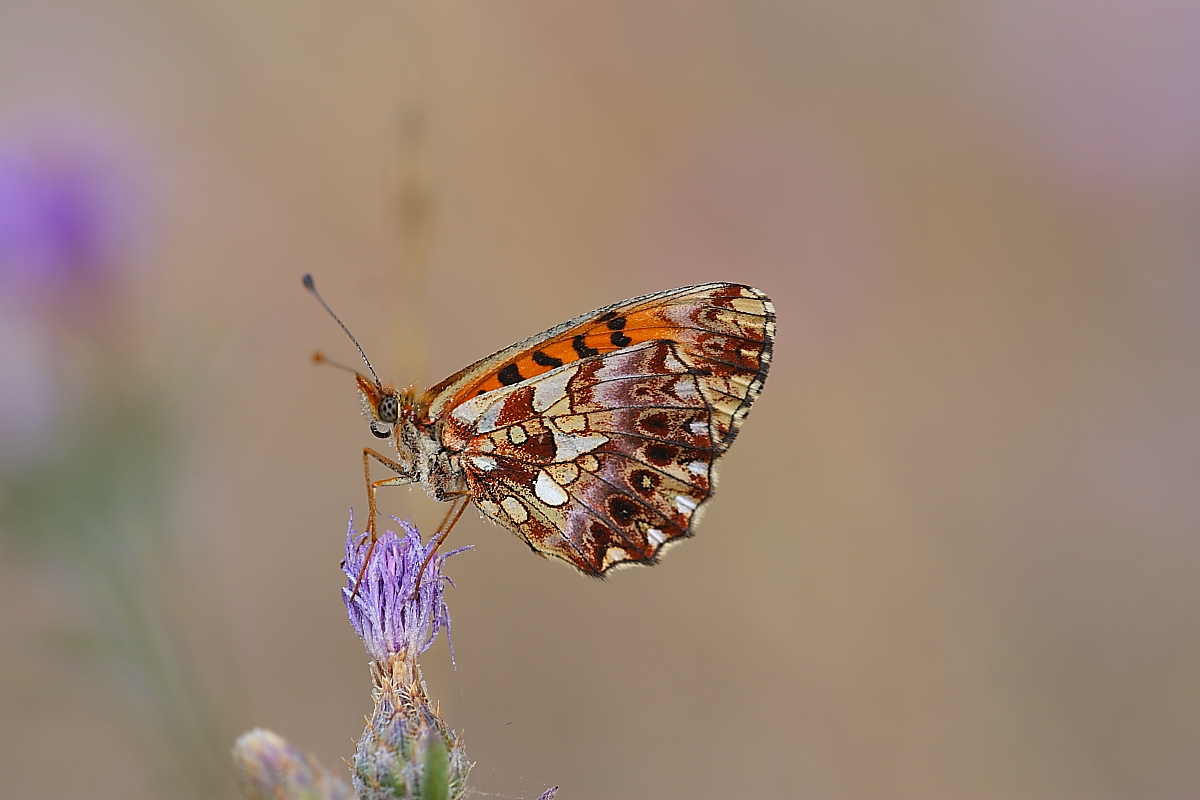
Weaver's Fritillary (Boloria dia)
2025 photographs highlighted in green. Click on any photograph to go to an enlarged picture, or simply scroll down the page.
|
|
|
|
|
| 7440_male_Alpes-Maritimes_25Jun07 | 25497_male_Alpes-Maritimes_08Jun11 | 35463_male_Var_18Jun14 | 36730_male_Var_11Sep14 |
|
|
|
|
|
| 50493_male_Var_31Aug22 | 50521_male_Var_3Sep22 | 36761_female_Var_11Sep14 | 27884_female_Côte-d'Or_26Jul11 |
|
|
|
|
|
| 34341_female_Var_10Sep13 | 42479_female_Var_24Apr17 | 48908_female_Var_9Sep21 | 51490_female_Lozère_13Jul23 |
|
|
|
|
|
| 48928_female_Var_9Sep21 | 42463_female_Var_24Apr17 | 5789_female_Var_26May07 | 36751_female_Var_11Sep14 |
|
|
|
||
| 16777_sex?_Var_25Jun09 | 8613_sex?_Var_27Jul07 |
|
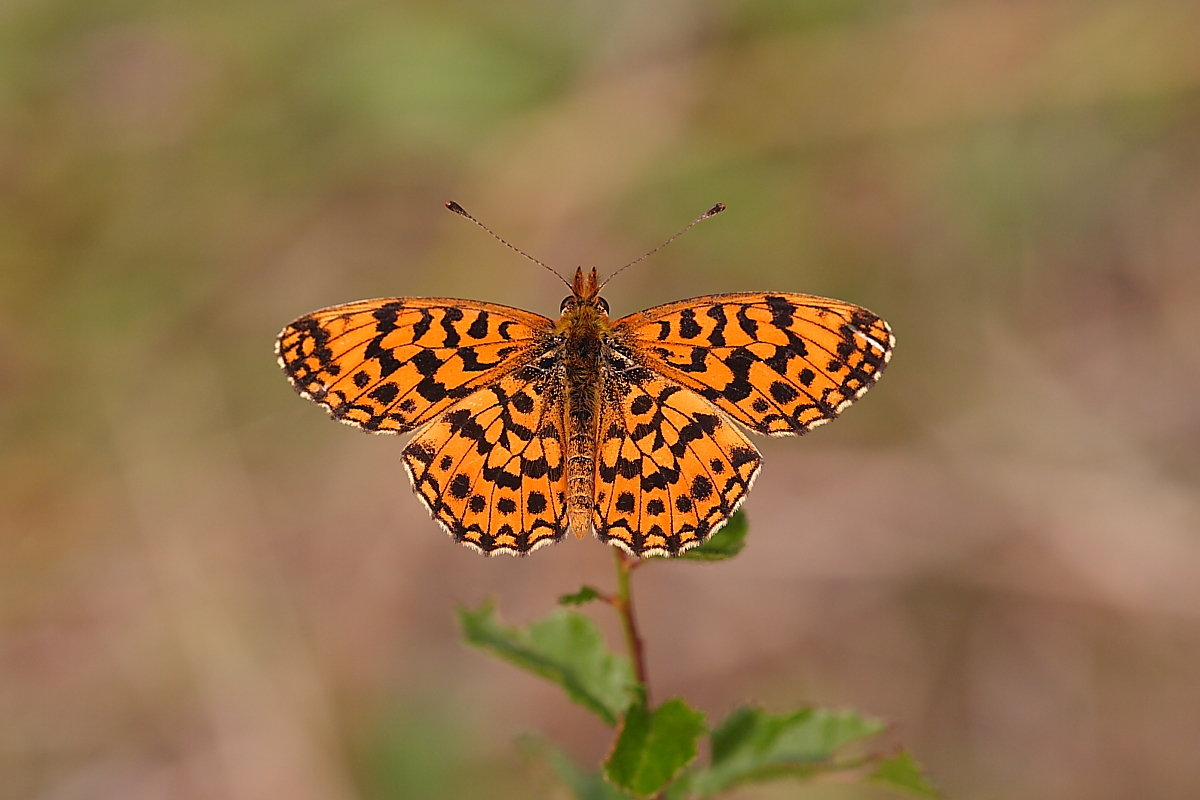
A relatively small fritillary, the upperside being superficially similar to the Pearl-bordered Fritillary (B. euphrosyne) and the Titania's Fritillary (B. titania) although easily distinguishable by the sharply-angled hindwing of dia, more readily apparent from an underside view. Titania is an altitude species, so any specimens at low altitudes are bound to be dia. The undersides of dia and titania are quite similar but can easily be differentiated on close examination.
However, something I had not previously considered is that dia e.g. 50521 is (or can be) remarkably similar to the female of Small Pearl-bordered Fritillary (B. selene), although their distributions generally do not overlap, although in 2023 I did find one instance (51490) of a location where it appears they co-exist. |
It seems to be reasonably widespread throughout southern France as I have seen at least one at most places I have visited, and it was only in September 2006 that I found a location at 765m altitude in northern Var where it was common, and in this location each September it has been very common indeed. It seems to vary in size, often producing very small individuals, sometimes with very narrow wings. It is also (and perhaps more widely) known as the Violet Fritillary.
A superb video of the life-cycle of dia has been produced by Filming VarWild and can be viewed on YouTube here: www.youtube.com/watch?v=Jys3FXFS32o |
| ref | sex |
observations |
alt. m |
| 7440 | M | a male, based on body shape (not 100% certain, though) and some subtleties of the black markings. Other subsequent photographs on this page of males do, in fact, suggest that this is a female. | 1080 |
| 25497 | M | a male, based on body length, and more heavily marked which is possibly an altitude effect. | 1320 |
| 35463 | M | a male, with rather narrow wings (top to bottom) but rather wide across. It may be a second brood, as dia may be triple brooded in southern Var, the first brood appearing in April. | 220 |
| 36730 | M | a male of the (probable) third brood. | 220 |
| 50493 | M | a very heavily-marked male, quite noticeable in flight. | 780 |
| 50521 | M | a male, quite fresh as apparent from the state of the fringes, but slightly dull with the black markings not as strongly contrasted as the norm for dia. | 220 |
| 36761 | F | a female of the third brood, with a rather suffused appearance. 36751 is the underside. | 220 |
| 27884 | F | a female, quite dark and heavily suffused, but the low altitude indicates that this is not an altitude effect. | 320 |
| 34341 | F | a female. | 220 |
| 42479 | F | a female, quite heavily marked, especially in the marginal region of the uph. 42463 is the underside. It was photographed in overcast conditions, and dia sits with open wings which tend to curve downward at the edges making it difficult to get them into focus, given the limited depth of field of macro lenses. | 220 |
| 48908 | F | a female, I feel, on its general appearance (wing shape, dusky colouring, heavier markings), although the body length gives me cause to wonder. This open-winged pose is typical of when the sky clouds over and the wing area is maximised to make use of what remains of the sun's rays prior to closing up completely as in 48928, which is the underside. | 220 |
| 51490 | F |
a female, very heavily marked, especially the uph post-discal
series of spots. I originally thought this was selene based
almost entirely on the location and altitude and the distribution maps that
showed selene at that location and dia not in the same general
region. Given that the location was well known and well-surveyed, it seemed
highly unlikely that dia had not previously been recorded there.
I then consulted the local experts, both of whom were unequivocally of the opinion that it is a female selene, so I put it originally on the selene page. However... a sharp-eyed contributor to the excellent UK Butterflies web site noticed that just enough of the hindwing was showing to reveal a degree of angularity that points very strongly to dia, probably conclusively, and almost certainly rules out selene. |
1540 |
| 48928 | F | the underside of 48908. | 220 |
| 42463 | F | a female, the underside of 42479. It is a beautifully cleanly marked underside, with strong violet (hence the alternative name) marbling effect. | 220 |
| 5789 | F |
a quite light and subtly-marked underside. It shows up the beautiful red-brown markings to good effect. I'm not sure why I originally thought this was a female, but a female upperside was photographed within 60 seconds, and so they may well be the same butterfly. |
220 |
| 36751 | F | known to be a female from a view of the upperside (36761 is the upperside). The delicate violet marbling shows why its alternative name is perhaps more appropriate. | 220 |
| 16777 | M? |
a fairly typical dia underside, midway between 5789 and 8613 in terms of strength of markings. |
220 |
| 8613 | M? |
a very darkly-marked underside. The angularity of the hindwing is visible, and this is a clear pointer to dia. I am not sure whether it is male or female, possibly male based on the slightly territorial-looking pose. |
780 |
7440_male_Alpes-Maritimes_25Jun07

25497_male_Alpes-Maritimes_08Jun11
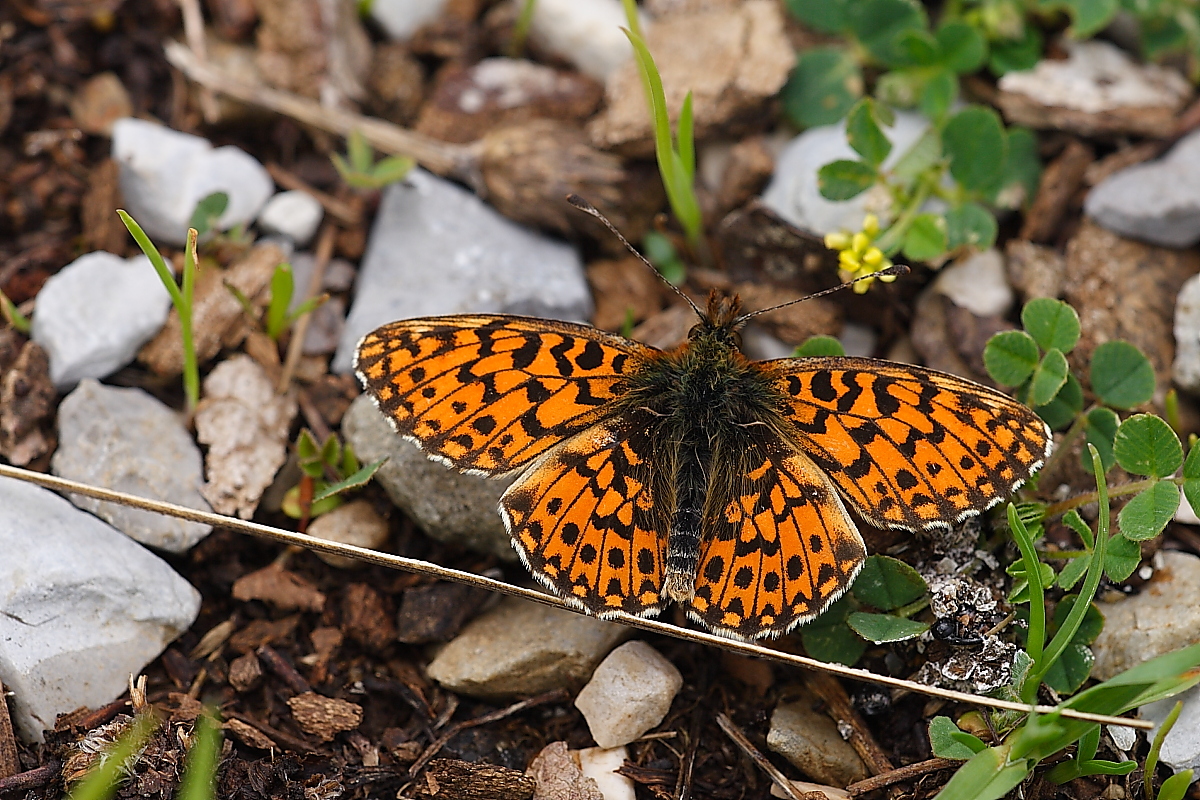


27884_female_Côte-d'Or_26Jul11